Dog and cat vaccinations in Oldwick, NJ
Protection against rabies, distemper and parvovirus, plus the lifestyle vaccines your pet's days call for, given after a complete exam.
Protection chosen for the life your pet leads
Vaccines prepare your pet's immune system for diseases that are hard or impossible to treat once they take hold. At Oldwick Animal Hospital, serving Oldwick and Tewksbury Township, dogs and cats get core and lifestyle vaccines as part of their wellness care. The American Animal Hospital Association (AAHA) sorts vaccines into two groups: core vaccines, recommended for all dogs irrespective of lifestyle unless there is a medical reason not to vaccinate, and noncore vaccines, recommended for some dogs based on lifestyle, geographic location and risk of exposure. Feline guidelines make the same split for cats. In New Jersey, rabies carries an extra reason: the state ties it to dog licensing.
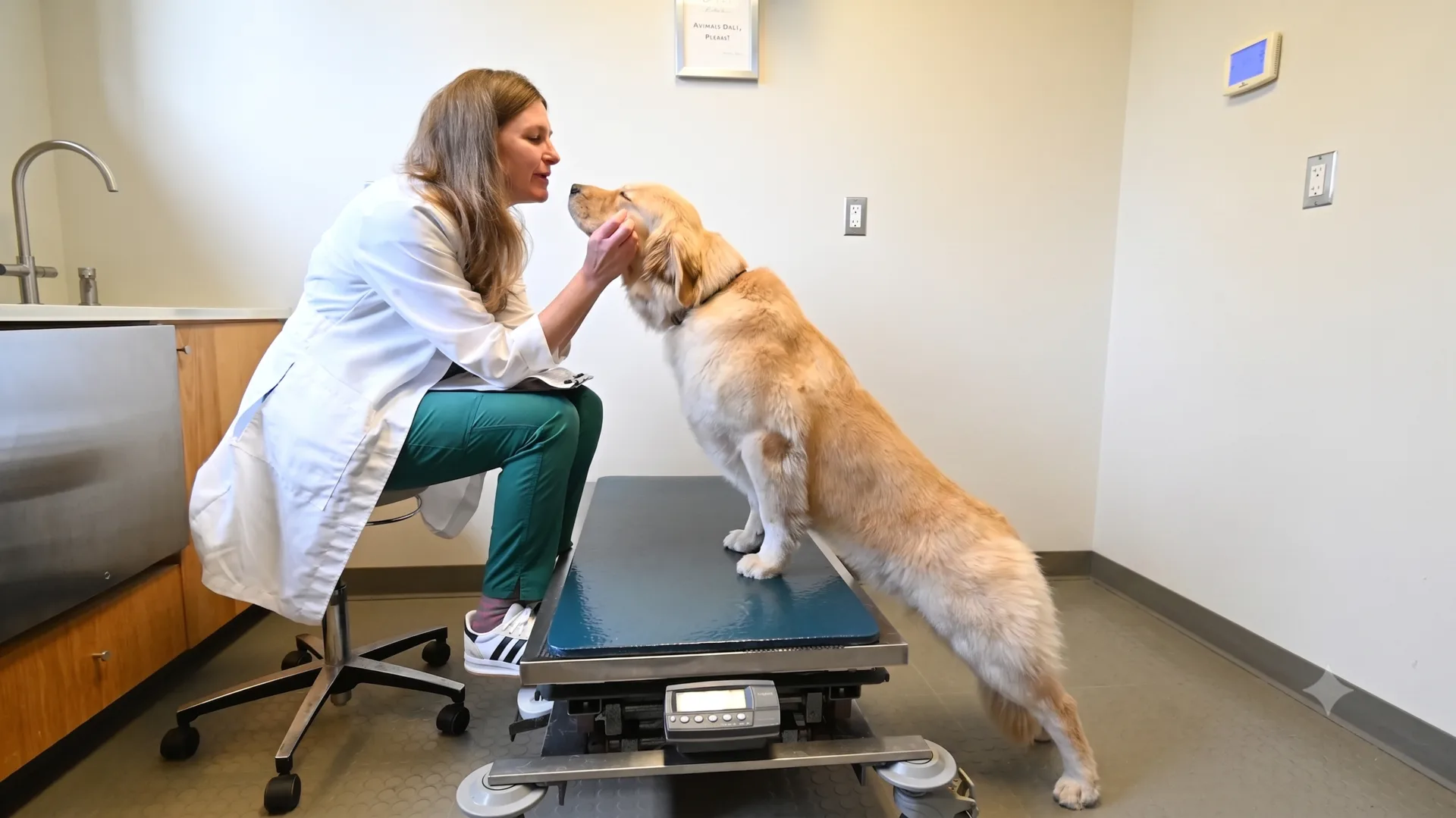
Every vaccine here is given after a complete physical exam, because the exam is the point of the visit. Core vaccines are rabies, distemper-parvovirus and leptospirosis for dogs, and rabies and FVRCP for cats, plus feline leukemia for kittens under a year. Lifestyle vaccines such as Lyme, Bordetella, canine influenza and feline leukemia for adult cats depend on where your pet goes and what it is exposed to. Your veterinarian builds the schedule with you, and the visit covers any screening that is due at the same time.
Oldwick Animal Hospital in Oldwick, NJ vaccinates dogs and cats after a complete exam, with core vaccines for every pet and lifestyle vaccines chosen with you. Rabies vaccination is required to license a dog in New Jersey.
- A complete physical exam before any vaccine
- Core vaccines: rabies, distemper-parvovirus and leptospirosis for dogs; rabies, FVRCP and, under a year, feline leukemia for cats
- Lifestyle vaccines matched to where your pet goes
- Rabies vaccination for New Jersey dog licensing
- Saturday appointments three miles away at Hunterdon Hills
Why vaccines still matter in New Jersey
Months of the licensing period a dog's rabies vaccine must cover before a New Jersey town can issue the license.
N.J. Admin. Code 8:23A-4.1Or older: the age for the last core dose in a puppy or kitten series in WSAVA's guidelines, because the antibodies a mother passes on vary from litter to litter. A booster follows at 6 or 12 months.
WSAVA Vaccination GuidelinesNew Jersey dogs tested for Lyme disease in 2025 came back positive in CAPC's data. Lyme is one of the lifestyle vaccines to discuss for dogs who hike.
Companion Animal Parasite Council, New Jersey 2025Dogs had an adverse event diagnosed within three days of vaccination, in a study of more than 1.2 million dogs. Small dogs given several vaccines at one visit had the highest risk.
JAVMA, 2005Cats had an adverse event within 30 days of vaccination, in a study of nearly 500,000 cats. Lethargy, with or without fever, was the most common.
JAVMA, 2007Of New Jersey's rabies cases in domestic animals since 1989 have been cats, an average of 18 cats a year over the last five years. Rabies vaccination is recommended for indoor cats too.
New Jersey Department of HealthHow vaccines work here
An exam before every vaccine
Our veterinarians examine your pet before giving any vaccine, so a lump, a heart murmur or a sore tooth is not missed.
Matched to your pet's life
Vaccine recommendations are based on each pet's lifestyle and each family's needs, not one list for everyone.
Core and lifestyle, dogs and cats
Rabies, distemper-parvovirus and leptospirosis for dogs, rabies, FVRCP and feline leukemia (under a year) for cats, plus lifestyle vaccines when your pet's days call for them.
Call or text, Saturdays nearby
Call or text (908) 439-2470 to book. Saturday appointments are seen at Hunterdon Hills, three miles away.
When to book vaccines, and when to call
Most vaccine visits are planned months ahead. These are the moments to book, and the signs after a vaccine that should not wait.
Check the date on your pet's last rabies certificate or vaccine record. New Jersey's Department of Health recommends revaccinating before the previous vaccine expires.
Book the first visit early. The vaccine and deworming series means a visit every three to four weeks, with the last core dose at 16 weeks or older.
Tewksbury Township dog licenses expire on December 31 each year, and the township asks for a current rabies certificate. Book ahead if the vaccine will lapse.
Book a visit soon so your veterinarian can examine your pet and plan its vaccines. Bring any shelter, rescue or breeder paperwork you have.
Tell us when you book. Your veterinarian will review which vaccine was involved and plan the next visit around it, which may mean fewer vaccines at once.
The AVMA lists these among the signs to watch for after vaccination, and an allergic reaction can happen soon after the shot. Call us right away so we can tell you what to do before you come in.
Rare, but an emergency. Call us right away. After hours, contact one of the emergency partners listed on our emergency page.
Call us the same day. If you find a bat in your home, the CDC advises contacting animal control or your health department so it can be safely captured for rabies testing.
What to expect at a vaccine visit
An exam first
Your veterinarian examines your pet nose to tail before any vaccine is given. A vaccine visit without an exam would miss the lump, the heart murmur or the sore tooth the vaccine has nothing to do with.
A plan for your pet's life
Tell us where your pet goes: hikes, daycare, grooming, other pets at home. Your veterinarian matches core and lifestyle vaccines to that and builds the schedule with you.
The vaccines
Vaccines that are due are given after the exam, along with any screening that is due, such as the yearly 4Dx and fecal test. Tell us about any past reaction before the first shot.
Records for the year ahead
Before you leave, ask when each vaccine is next due. Keep the rabies certificate: New Jersey towns ask for it to license a dog.
Core and lifestyle vaccines for dogs and for cats
Dogs Core + lifestyle
Core for every dog: rabies, distemper-parvovirus and leptospirosis. AAHA moved leptospirosis from noncore to core, and the ACVIM consensus recommends it every year for all dogs from 12 weeks of age. Lifestyle, depending on where your dog goes: Lyme, Bordetella and canine influenza.
Cats Core + lifestyle
Core for every cat: rabies and FVRCP, plus feline leukemia for kittens and cats under a year. After that, the AAHA/AAFP feline guidelines treat feline leukemia as a lifestyle vaccine for low-risk adults with no contact with cats whose FeLV status is positive or unknown, and call for an FeLV test before the first dose. Rabies vaccination is recommended for indoor cats too, since bats do get into houses.
A visit every three to four weeks for the vaccine and deworming series. WSAVA's guidelines put the last core dose at 16 weeks or older, then a booster at 6 or 12 months.
Reactions were more common in smaller dogs and rose with each vaccine given at one visit, in a study of 1.2 million dogs. Ask whether to spread vaccines over two visits.
An indoor cat can still meet a bat. Cats are the domestic animal most often found with rabies in New Jersey, so the rabies vaccine stays on the list.
Dogs who hike Tewksbury's trails and fields, or spend time around livestock and wildlife, have different vaccine needs from dogs who stay close to home.
Caring for your pet after vaccines
Most pets go home and carry on as usual. These habits make the day easier and keep the records ready.
A quiet day is normal
Lethargy, with or without a mild fever, was the most common reaction in a study of nearly 500,000 vaccinated cats. Let your pet rest, and call us if it lasts or worries you.
A small lump can be normal
The AVMA notes that a small, firm swelling can form under the skin where the vaccine went in, and it should start to go away within a couple of weeks. Call us if it does not, or if it grows.
Keep the rabies certificate
File it with your dog's license papers. Tewksbury Township asks for a copy of the current certificate to license a dog by mail, and licenses expire December 31.
Plan ahead for new routines
Before daycare, grooming or travel, ask the facility for its vaccine list and book early. Some vaccines start with two doses three to four weeks apart, such as the feline leukemia vaccine.
Bats and wildlife
If you find a bat in your home, the CDC advises contacting animal control or your health department so it can be safely captured for rabies testing. Then call us about your pet.
Skip your own pain relievers
Never give a human pain medication for a sore spot after a shot. Over-the-counter medications and supplements made up 16.9% of ASPCA Poison Control's 2025 cases. Call us instead.
The veterinarians at Oldwick
Vaccines are part of the wellness visit, so whichever veterinarian you see will examine your pet and plan its vaccines with you. If you prefer a particular doctor, just say so when you book.

Dr. Janisse Marie Cailles

Dr. Anna Owren Fayne

Dr. Kerry Elizabeth Scholz

Dr. Leighann Diehl
Easy to reach from Rt 78
Oldwick Animal Hospital is at 130 Oldwick Road, Whitehouse Station, NJ 08889, just off Rt 78 along Rte 523/517, and sees dogs and cats from Tewksbury, Mountainville, Cokesbury, Whitehouse Station, Lebanon, Califon, Pottersville, Far Hills, Bedminster and Readington.
Monday - Friday: 8:00 AM - 6:00 PM
Saturday: 8:00 AM - 3:00 PM (medication pick-up)
Sunday: Closed
Saturday appointments are seen at Hunterdon Hills Animal Hospital, three miles away. The Oldwick reception desk is open Saturdays 8 AM to 3 PM for medication pick-up.
Vaccination questions
Is the rabies vaccine required in New Jersey?
For dogs, yes. Every dog over seven months must be licensed, and a New Jersey town can only license a dog whose rabies vaccine gives immunity through at least 10 of the 12 months of the licensing period. For cats, many New Jersey towns require it by local ordinance, and it is recommended for every cat.
Does my indoor cat really need a rabies vaccine?
Yes. Cats account for 93% of New Jersey's rabies cases in domestic animals since 1989, according to the state Department of Health, an average of 18 cats a year over the last five years. Bats do get into houses, and an indoor cat that meets one is exposed.
What side effects can vaccines cause?
Most pets have none. In two large studies, 38.2 in 10,000 dogs and 51.6 in 10,000 cats had a reaction diagnosed after vaccination, most often lethargy, with or without a mild fever, in cats. Hives, facial swelling, persistent vomiting or trouble breathing need a call to us right away.
Can my pet get several vaccines at one visit?
Often, yes, but it is worth a conversation. In a study of more than 1.2 million dogs, each additional vaccine at one visit raised the risk of a reaction by 27% in dogs of 22 pounds or less, and by 12% in larger dogs. Ask your veterinarian whether splitting them makes sense.
Does my dog need the Lyme vaccine in Tewksbury?
It depends on where your dog goes. In 2025, 1 in 15 New Jersey dogs tested for Lyme disease came back positive in CAPC's data. Dogs who hike, walk fields or spend time in the woods meet more ticks than dogs who stay close to home. Your veterinarian will weigh the vaccine with you.
My pet is overdue. Do we have to start over?
Not always. Your veterinarian will look at which vaccines lapsed and for how long, then decide whether one dose or a new series is needed. For rabies, New Jersey's Department of Health recommends revaccinating before the previous vaccine expires, so book before the date on the certificate.
Which vaccines does my dog need for daycare or grooming?
Each facility sets its own list, so ask for it in writing before you book. Bordetella and canine influenza are two of the vaccines AAHA recommends for some dogs based on lifestyle and risk of exposure, and rabies is required for licensing. Bring the list to your dog's exam.
Why does a puppy or kitten need a series of shots?
Because antibodies from the mother can block a vaccine, and the level varies from litter to litter. WSAVA's guidelines call for several core doses, with the last at 16 weeks or older and a booster at 6 or 12 months. Here, that means a visit every three to four weeks.
Care that works together
Part of the Symbios network
A family of 6 neighborhood animal hospitals across New Jersey, every one 100% independently and family owned. Each is rooted in its own community and run by its own doctors and front desk team, with colleagues across the family comparing notes behind the scenes. Specialists, extended weekend hours, and shared records are all just down the road.
The personal touch of your neighborhood hospital, with a whole family of doctors behind it.
Ready to book your pet's vaccines?
Call or text us, or request an appointment. Vaccines are given after a complete exam, so one visit covers the checkup and the vaccines your pet is due for.